

The 2026 FIFA World Cup is shaping up to be one of the most exciting in decades — and not just because it’s being hosted across the U.S., Canada, and Mexico. For millions of fans worldwide, this tournament brings something even more special: the arrival of first-time qualifiers and nations returning after generations away. These teams didn’t just qualify — they fought, shocked, and inspired their way into football’s biggest show.
Here’s a fan-friendly guide to the debut nations (and long-awaited returners) that will capture hearts in 2026.
Haiti
History
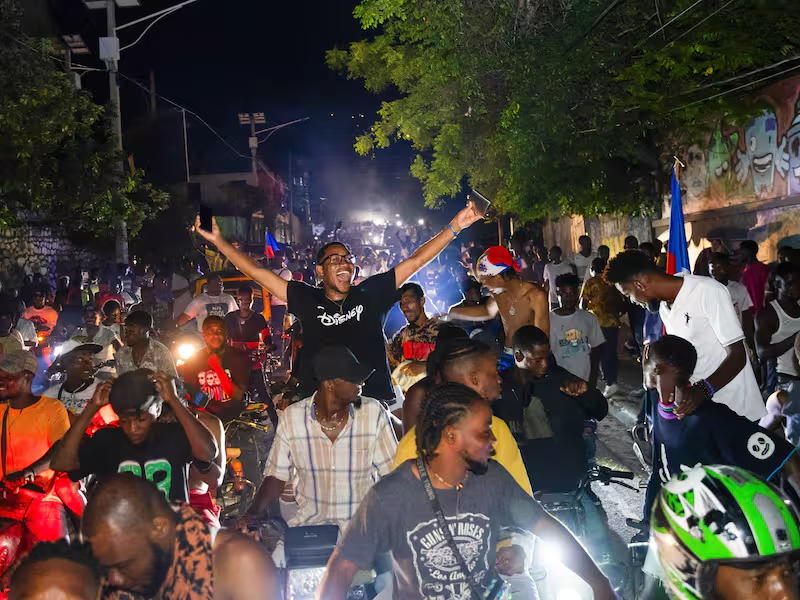
Haiti last qualified for the World Cup in 1974 — more than 51 years ago. Their return in 2026 is one of the most emotional stories of the qualifying cycle. Despite political instability, economic hardship, and limited home-based football infrastructure, Haiti climbed their way back with resilience and real belief. Many of their qualifiers were played outside of Haiti due to stadium issues, making the achievement even more remarkable.
Top Players
-
Duckens Nazon – Haiti’s all-time top scorer and emotional leader
-
Frantzdy Pierrot – Strong, physical forward capable of big-moment goals
-
Johny Placide – Veteran goalkeeper with years of national team experience
Challenges
Haiti’s journey has been shaped by constant adversity: resource limitations, unstable training environments, and frequent relocations for home matches. But their diaspora support — especially in Miami, New York, and Montréal — will give them some of the biggest fan energy in the tournament.
Jordan
History
For the first time in history, Jordan has qualified for a FIFA World Cup. Their rise has been steady but under the radar, built on disciplined defending, spirited attacking play, and a growing domestic football culture. They were long considered “almost there” in Asia, but 2026 marks the moment their potential finally became reality.
Top Players
-
Mousa Tamari – Fast, skillful winger playing in Europe
-
Yazan Al-Naimat – A young forward with a sharp finishing instinct
-
Hamza Al-Dardour – Jordan’s historical top scorer and fan favorite
Challenges
Jordan lacks the financial muscle and depth of Asia’s traditional powers. They rely on strong coaching, smart tactical planning, and a tight-knit squad. Their qualification came through grit more than glamour — and that’s exactly why fans will respect them.
Cape Verde
History
Cape Verde, a tiny island nation with a population under 600,000, has officially made it to the World Cup for the first time. Their rise over the past decade has been steady, but reaching the World Cup is a massive leap — one built on organization, smart management, and tapping into a global diaspora of talented players.
Top Players
-
Dailon Livramento – A standout performer in decisive qualifiers
-
Ryan Mendes – Veteran winger and offensive creator
-
Stopira – A key defensive anchor with leadership experience
Challenges
Domestic football infrastructure is limited, and most players develop overseas. Cape Verde must constantly manage a wide-spread diaspora squad, coordinate travel, and compete against African football giants with far more resources. Their qualification is proof of how far passion and strategy can go.
Curaçao
History
Curaçao’s qualification is one of the ultimate underdog moments of the 2026 cycle. A tiny island in the Caribbean, Curaçao has invested heavily in coaching, talent development, and diaspora recruitment. Over the past decade, they’ve transitioned from regional minnows to a competitive force — and now, a World Cup nation.
Top Players
-
Leandro Bacuna – Experienced midfielder with strong European pedigree
-
Jurgen Locadia – If selected, a powerful forward option
-
Rangelo Janga – Reliable goal-scoring forward
Challenges
Curaçao faces challenges similar to Cape Verde: small population, limited facilities, and reliance on players based abroad. Building chemistry across long travel distances and a diverse squad is always complex — but they’ve proven they can overcome it.
Uzbekistan
History
For decades, Uzbekistan has been one of Asia’s best teams never to make a World Cup — always close, always dangerous, but never able to get over the final hurdle. In 2026, that finally changed. Their qualification is a long-awaited breakthrough for Central Asian football, representing years of investment and steady progress.
Top Players
-
Eldor Shomurodov – Prolific striker with major international experience
-
Odil Ahmedov (retired legend, but his influence lingers)
-
Umidjon Ergashev – Rising star in regional competitions
Challenges
Uzbekistan has long been overshadowed by Asian powerhouses like Japan, Iran, South Korea, and Australia. They had to overcome past heartbreak, develop a deeper player pool, and find a tactical identity that matched elite competition.
Why These Nations Matter
These five teams don’t just bring new flags to the tournament — they bring fresh energy to the World Cup:
-
new fan cultures
-
new storylines
-
new styles of play
-
new regions represented on the global stage
Whether you support a big nation or you’re the type who always adopts a “second team,” these underdogs will make the 2026 World Cup more unpredictable, emotional, and electrifying.
The World Cup Is Always Better With New Blood
As the group stage kicks off in North America, expect these debut nations to draw huge neutral support — especially in cities like Miami, Los Angeles, New York, Houston, and Atlanta. Their stories will energize fan zones, spark global attention, and remind everyone why this sport is so special.
New nations bring new magic.
2026 is about to deliver plenty of it.


